Tumi hasn’t released an album since 2010, a year in which he released his second solo album, Whole Worlds and his last album with his band The Volume, Pick a Dream. But that’s not to say The Poet Emcee has been out of the radar since then. He released the Powa mixtape in 2011 addressing the rape crisis in South Africa. In 2012, he teamed up with his close friend, emcee Zubz as TZ Deluxe to rap over a selection of kwaito beats on a mixtape titled Where Were You? He also collaborated with French band Chinese Man on the superb “Once Upon a Time”. And not forgetting singles like “Hello Kitty”, “Broke People” and guest verses on tracks like “Dats Wassup” by Zeus, “Keep Debiting” and “No Sleep” remix by Reason, among others. He has also released a lot of free tracks online sporadically.
After 2010, the emcee shifted his focus from the mic to being a record label executive when Motif ceased being just a one-man label. He signed gifted wordsmith Reason to his Motif Records imprint. He gave the East Rand emcee’s tired sound a facelift and the rapper became a star. Other Motif signees, Zaki Ibrahim, Samthing Soweto and Perfecto all took the front seat.
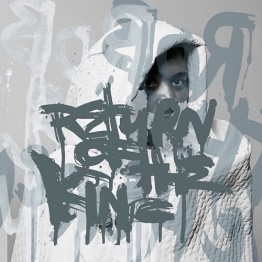
Alongside Zubz, Tumi is one of the most open-minded hip hop artists of our time. Through all the variation of beats he has flowed or crooned over, Mr Molekane packs food for thought, with eloquence and emotion not many rappers can achieve. So when he released his long-promised album Return of the King on June 16, everything in my world stopped. The album I had been waiting for, for close to four years (though it felt like a lifetime) was finally out. I didn’t know what to expect, which excited me more. I also knew that I wasn’t going to be disappointed.
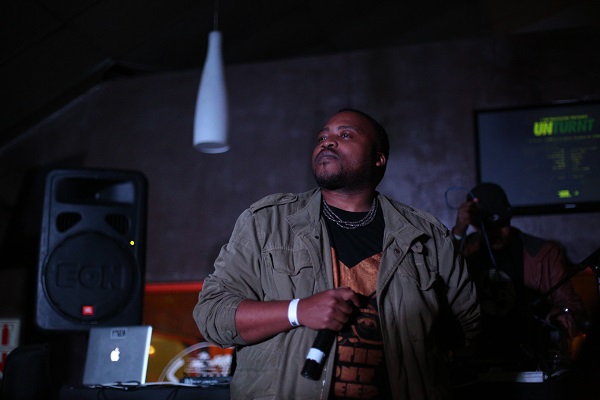
Tumi performs in Cape Town. (Image by Andiswa Mkosi)
On the album, Tumi serves lyrical grandeur on the silver platter that is his formidable flow, and in just 10 tracks (the albums has 12 tracks, but he doesn’t feature on the intro and the outro). His imagery and storytelling are still of unmatched standards. What makes Return of the King different from his previous albums is the music. Well, sort of. Tumi has been experimenting with different sounds since releasing his last album. The same guy who was religiously rapping over warm and dense beats on Live at the Bassline, Music From my Good Eye, Whole Worlds and Pick a Dream was jumping on electro shit (“Higher Ground”) and regular 808s-based production (“Broke People”).
He recently explained this shift in sonic direction on a skit in the Made of Taste mixtape he released prior to Return of the King. “You know a certain soundscape or vibe that you associate with me,” he said. “And people have come to expect the same thing; that warm sultry beautiful [sound but] as an artist, once you feel like you’ve done something – you’ve painted something, you don’t wanna duplicate that for the sake of it, that’s kinda boring. I feel like there’s more inside and from the world that one can draw from.”
On Return of the King, you’ll find your regular 808s-based beats with heavy basslines as heard on your radio, on songs like “Visa”, “In Defense of My Art” and “Broke People”, the last two produced by Rene “Snaz” Hill, a producer from Canada, who has produced for Drake, French Montana, DMX, M.O.P and more. Then this new sound Tumi seems to have grown comfortable with, it’s a boundless form of raw traditional Pan African music with hip hop sensibilities and a global appeal. It’s characterised by deep basslines; pounding kicks; subtle, acute synths; clanging pads; and gnarling guitar riffs (think along the lines of Jay Z and Kanye West’s “No Church in the Wild”). The beats are big! Swiss producer Fred Hirschy is behind that sound on tracks like “I’m Killing”, “Rob the Church”, “Radio Freedom” and “G65”. Snaz also offers the same production style on “Hlasela Dithutha” which features Lesotho emcee Kommanda Obbz and American slam poet Saul Williams. Massive song! Buks does the same on “Stop the Violence”. The music wasn’t engineered but artistically built. It’s like Tumi didn’t select beats but the beats were created around his vocals, making sure his voice is always the lead instrument. Tumi revealed on Twitter that the album was mixed and mastered by Laurent Dupuy who won a Grammy for his work on Beninese iconic singer Angélique Kidjo‘s Djin Djin album.
The album’s intro, “Return of the King” is done by AKA, returning the favour Tumi afforded him when he did the intro to the Super Doro Mega’s Levels album in 2014. AKA impresses in true AKA fashion but “I’m Killing”, the track that follows, makes AKA’s intro an unnecessary addition to the album. Tumi exhales a gale of audacious self-assuring lines like “The 2013 Illmatic/The 30-plus T is spazzin’/I heard’em say ‘he’s a has-been’/The chirpin’ turns quick to tragic/when the turtle out-thinks the rabbit/Prefer to write deep in passion/Fertilise seeds, turn a tide/so you identify a certified classic,” with superb breath control and a rigid voice projection, over the enigmatic type of beat I tried to describe above. That bassline and a folk vocal loop in the background conspire to swallow the emcee’s sonorous voice. But he emerges victorious; he devours the Fred Hirshcy beat effortlessly and sets the bar high for himself.
Still on the subject of being king, Buks provides a breezy synthesizer and a healthy bassline coupled with scratches on the chorus for Tumi to break it down why exactly he claims to be king on “Bayete”. “I’m king whether you like it or not/ Was given the crown before the clowns you’re hyping a lot/ It feels nice the higher you are/ But when the king comes down to unwind they fight for the spot,” he raps. Buks offers a glossy vocal towards the end making for an accessible song.
But Tumi isn’t just here to tell us he’s a king on Return of the King. After an argument with his partner on the latest single off the album – “Visa”, he goes on to dissect issues on “Broke People”, “Hlasela Dithutha”, “Radio Freedom” and “Rob the Church”. The features make for a grand Pan African gathering of artists you wouldn’t expect to find in one place at the same time. What album can have Kelly Khumalo, Saul Williams, Busiswa, Simphiwe Dana, Neo Muyanga, Kommanda Obbz, Ziyon, Reason and AKA, and still not sound scattered? Tumi knew what he wanted, every feature was roped in for a specific reason as opposed to just him expanding his horizons and reach – which is the purpose features tend to serve. With a global fanbase and a catalogue as impressive as his, Tumi doesn’t need any validation. None, whatsoever!
House singer Busiswa, makes an appearance on “Visa” playing Tumi’s insecure partner accusing him of infidelity. She believes the emcee uses performing as an excuse for cheating sprees, with her overt Xhosa lady character that is stereotypically apt. The song is tailored for radio with club-ready 808s and a heavy bassline. South African radio is in need of hip hop songs that aren’t about parties. Like, on the real!
Tumi explores infidelity further on “Stop the Violence”, one of the strongest cuts on the album, and oh boy, is that song cold?! With lines like: “Yeah, I’m smooth in the club, misses/ You should see me work a room full of bad bitches/ Play unapproachable, like I’m not sociable/ Then before you know it, I move in – shark business/ I’m particularly killer if the broad’s timid/ She play that girl next door shit – off limits/ church-going pooh-bearing/ no swearing monastery/ But get that good dick, she certified authentic.” The emcee sings the hook over a bold bassline and muttering guitar strings, Buks surprised me on this one.
“Broke People” featuring Samthing Soweto, a single that’s been out for about two years and has been on my playlist ever since, made the album, with tweaks only a scrupulous ear will pick up – like a bigger bassline, a healthier kick and some additional keys on the hook (my ear took time to adjust but now I can’t even listen to the old version). This song is one of those few Tumi songs you can grasp in one listen, and though two years old, it still stands out. I’m not really sure why I love a song reminding me how poor I am, but hey. I believe we are still owed a video for this one. Simphiwe Dana blesses the hard-hitting “Radio Freedom”, with her spiritual vocals. Tumi skillfully tailors names of African leaders and their fashion senses: “That’s my type of fashion/That ‘change the world’ swag shit/ Malcolm in fedoras and Walter on Robben island/ In them green overalls and his lawyer glasses/ That Kenneth Kaunda handkerchief/ Biko on his pimp shit with his mistress.” Kelly Khumalo sings an impressive hook on “Rob the Church” (the album was initially to be called Rob the Church but Tumi changed his mind). Tumi spits lines like “Let’s go out on a field trip/ see how the world robs the church of its teachings/ you Halelujah all day sing praise amen then it’s back to the realness/ You gotta do what don’t make you a saint to get paid/ and that little instance/ you got confused on praying, it’s love but it’s hard to break down to your infants.” The emcee touches on how the world has tainted the church to a point of obscurity and the hypocrisy of belief. Kelly emphasises the importance of taking time away from church and knowing yourself.
Tumi dismisses the grand gathering with some solo Sesotho crooning by Neo Muyanga over a piano filigree on “Kea Hanna”. Before that, Tumi takes us on a grand tour of his friends’ cars and makes a juxtaposition with his own struggles and itinerary to success over what I believe to be the best beat on the album, on “G65”. The producer incorporates some folk song vocals and bongo drums into modern production. Congolese vocalist Fredy Massamba provides a solid hook you don’t even need to understand to appreciate. Tumi makes it look easy with a laidback delivery which is engaging and with enough conviction for the emcee to not get swallowed by the multi-layered music.
Tumi has mastered all his artistic dynamics, and is the prototype of a perfect emcee. I can’t fault Return of the King anywhere. I bump it from start to finish without skipping any song, and as soon as it’s done, I press repeat! And with every listen, I discover something new, be it in the music or just the meaning behind the lyrics. As I write this, my favourite songs on the album are “Stop the Violence”, “G65”, “Visa”, “I’m Killing”, “Rob the Church”, “Bayete”… look, this is not really going to work, every track is worth your time and money.
Stream Return of the King on Deezer and download it on iTunes.